Join us as a distributor! Sell locally — Contact us today!
Solar energy deployment has gained momentum in America, and homeowners and businesses must find clever ways to reduce the initial installation costs and enjoy high returns for their investments. One among these strategies would be to leverage advantages offered by taxes. Solar incentives at the federal and state level will probably play even greater roles in 2025 to fuel the transition to clean, renewable energy. But what exactly will these incentives be like a year from now? And how will you benefit most from them?
In this guide, we will walk you through major tax credits for solar power in 2025, the variations based on states, and the five most solar-friendly states in America. Also, find out why time is right to switch to solar, especially with the latest exciting products from companies like Highjoule Group that are making clean energy cheaper and more efficient than ever before.
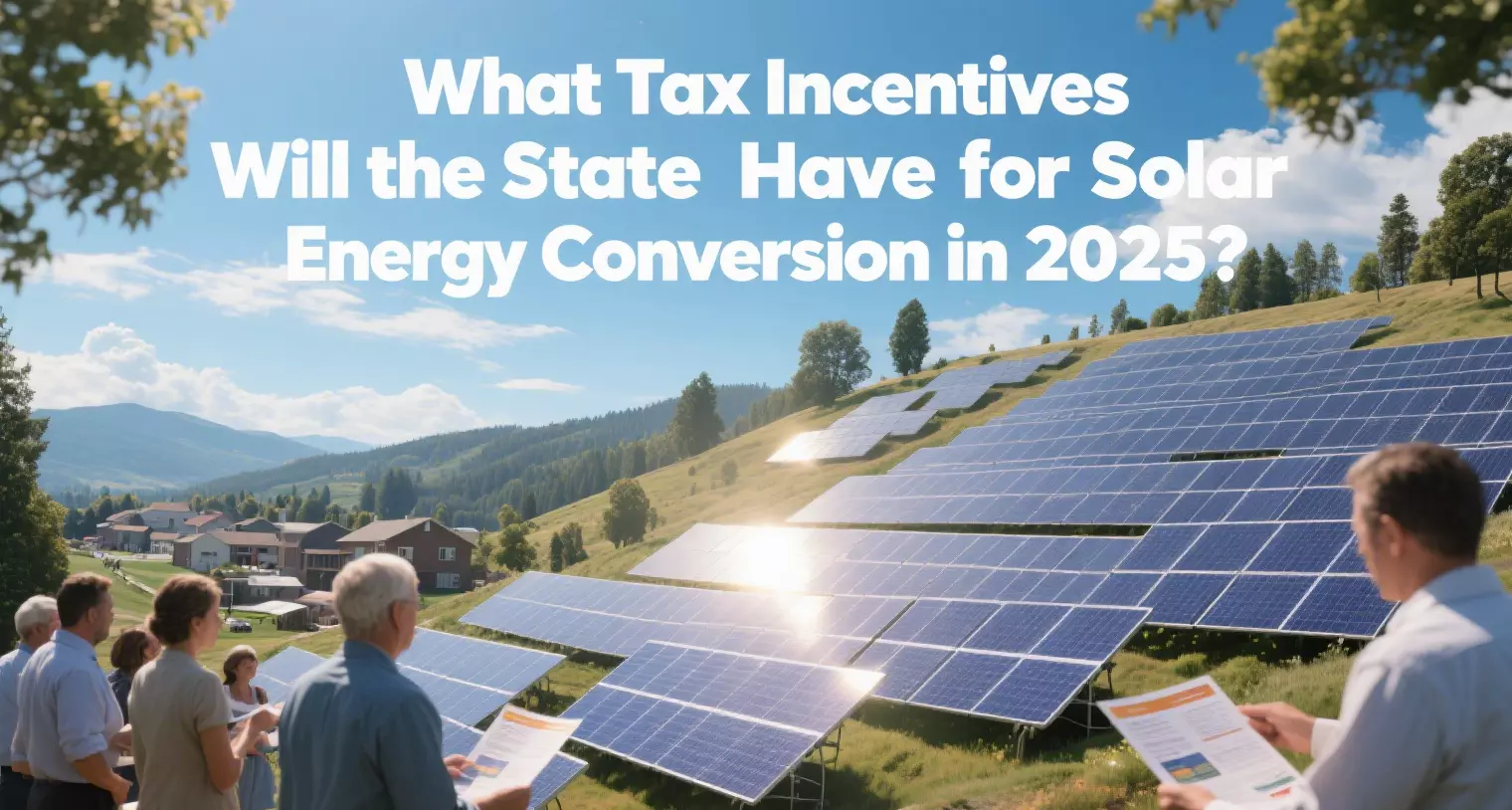
Now, choosing solar power is not just a matter of preserving the environment, it is gradually becoming a good investment strategy. In 2025, several support policies will be put into action that will prompt individuals to adopt this form of renewable energy. They are federal tax credits, state tax deductions, installation rebates, and power incentives, which significantly reduce the total cost of the solar system.
Some of the most popular incentives are:
The ITC program has been extended to 2032 and provides up to 30% system installation cost credits to residential and commercial users. The policy is not a tax refund but tax payable reduction. For example, on a $20,000 system, customers can receive up to $6,000 tax deduction, which will significantly cut the investment payback period.
In most states, solar customers are allowed to feed back excess electricity into the grid and receive credits accordingly through electricity bill deductions. This will motivate customers to optimize system generation. As some regions are anticipated to move their rate structures in 2025, customers are urged to monitor local policy changes.
Whereas solar systems are likely to contribute value towards the market value of homes, some states have policies that guarantee that the burden of increased property taxes is not imposed on the users. At the same time, some states also have sales tax exemptions to allow customers to save an additional 5% to 10% at the stage of equipment purchase.
Several utility companies and city governments provide single payment rebates to offset the cost of the initial installation. Further, the solar renewable energy certificate (SREC) program allows customers to sell “green power credits” based on power output, with an additional source of income for businesses or residences. One SREC can be earned per megawatt-hour of electricity generated, and the energy company purchases it back in order to meet the regulations.
Performance incentive plans provide payments based on the system’s true power generation per kilowatt-hour, generally for several years. This is a production capacity-based program that provides more returns to users of higher-efficiency systems.
In order to lower the threshold, the majority of sites started low-interest or interest-free loans for locals to complete the purchase of solar energy systems. However, some preferential policies rolled out by the federal government require users to own the system completely, and leasing the system itself is not qualified for corresponding tax credits.
Let us take a look at the proactive initiatives by various states in the United States to enable the popularization of solar energy.
In 2025, solar energy won’t just be about lowering emissions — it’ll be about maximizing financial gain. As more states push for renewable energy targets, and utility rates continue rising, solar users will enjoy substantial cost savings year over year.
With numerous local and national incentive programs available, 2025 offers a window of opportunity to lock in long-term energy independence at a reduced cost.
But it’s not just about incentives — it’s also about having access to the right equipment.
Solar energy will not just be a synonym for environmental protection in the years to come, but is slowly becoming a significant tool towards sustainable economic benefits. While the states continue to advance the policies for renewable energy and the price of electricity continues to rise, households and enterprises increasingly will be experiencing actual savings on the electricity bill.
The government is also increasing support, and subsidies and tax deductions for solar consumers are being provided by most states, so 2025 is an important year of window opportunity to cut energy expenditure and become energy-independent.
Subsidies, though, are not the entire solution, choosing the correct products and systems is the real essence.
Being an active supporter of clean energy technology, Highjoule Group has always endeavored to deliver users with efficient and stable one-stop solar power solutions. Our products include high-performance photovoltaic modules, smart inverter systems, and flexible energy storage devices, which can be applied to various scenarios from residential, commercial and industrial.
Whether you are seeking to reduce your monthly electricity bill or want to build an energy system independent of the public grid, Highjoule’s solutions can protect your investment. We will also assist you in fulfilling the application process of relevant subsidies, tax rebates and other incentive policies so that each investment receives a considerable return.
2025 will be the golden age to implement green energy. It is currently the most suitable time to plan.
Call us to learn how to make use of Highjoule Group’s solar technology to gain more economic benefits and energy independence for your home or business.
Note: Specifications are subject to change without prior notice for product improvement. Data Sheet / Get your free product catalog and the latest pricing!
Rated power indicates the maximum instantaneous discharge capability of the system, typically measured in kilowatts (kW) or megawatts (MW).
Energy capacity refers to the total amount of energy that can be stored, usually expressed in kilowatt-hours (kWh) or megawatt-hours (MWh).
Leverage differences in electricity pricing between peak and off-peak hours to charge the system during low-cost periods and discharge during high-cost periods, effectively reducing energy expenses.
Energy storage can flatten load peaks and smooth power demand curves, helping businesses reduce costly demand-based electricity charges.
When the existing transformer capacity is insufficient during certain peak periods, energy storage systems can supplement power without requiring transformer upgrades, saving on infrastructure investment.
Energy storage enables participation in grid demand response events, providing backup during peak grid demand and generating compensation, without impacting business operations.
General info: electricity type, base tariff, time-of-use electricity pricing, and production schedules during power outages.
These details help design charge/discharge strategies, determine tariff-based vs. demand-based models, assess storage usage times, and align with production cycles.
Load data: annual power consumption patterns, average and peak loads, transformer capacity.
This helps estimate the optimal system capacity, align with transformer limits, and develop charge/discharge logic and economic models.
Engineering documentation: power distribution diagrams, plant layout, substation schematics, cable routes, and available installation space.
These are crucial for determining system placement, transformer connection points, and access plan design.
The sum of energy storage charging power and the enterprise’s peak load must be below 80% of the transformer's rated capacity to prevent overloads.
Daytime peak load should exceed the maximum discharge power to ensure cost-effective discharge scheduling.
Monthly or annual power use alone is insufficient—detailed daily load profiles are essential to calculate system sizing accurately.
If an enterprise has a single transformer, then total load data typically reflects the transformer's actual load, and a preliminary system size can be estimated. However, if multiple transformers are involved, the aggregate data may not reflect individual transformer loads. In such cases, separate load data for each transformer is required to accurately determine system sizing.
Yes. Industrial and commercial PV-storage integration projects often use AC-coupled configurations. With Highjoule’s intelligent EMS, real-time monitoring of integrated storage cabinets and PV inverters allows for optimized energy use under "load-first" strategies, enhancing PV utilization efficiency.
Home energy storage systems store solar-generated electricity during the day for use at night or during peak pricing periods. This reduces reliance on grid power and lowers electricity costs, especially in regions with time-of-use pricing.
The service life of most home energy storage systems ranges from 10 to 15 years. Lifespan depends on battery type, usage patterns, and maintenance. Highjoule products include long-term warranties to ensure system reliability over time.
Highjoule's base station storage solutions adopt a redundant power design that enables rapid switching to backup supply during outages or fluctuations. Intelligent monitoring and automated control systems maintain 24/7 uptime, ensuring consistent communication operations.
Highjoule energy storage solutions are modular and flexible, allowing seamless integration with various base station configurations. The scalable design simplifies installation and accommodates future expansion needs while minimizing disruptions to existing infrastructure.
The above answer is for reference. For further details, please reach out to us.
It is suitable for various power consumption scenar ios such as residential buildings and commercial office buildings
* Fill out this form and our experts will help you find the perfect solar storage solution for your home or business.
* Fill out this form and our experts will help you find the perfect solar storage solution for your home or business.