
How much is the BESS? Past Decade Analysis and Future Forecast (2016-2036)
Battery Energy Storage Systems (BESS) have rapidly evolved from a costly pilot technology to a core pillar of modern clean-energy infrastructure. Prices have dropped from the system-level equivalent of $700–900/kWh in 2016 to around $200–350/kWh by 2026, and are expected—under favorable technological and policy conditions—to decline toward $150/kWh by 2036. As costs fall and software intelligence increases, storage is shifting from a financial hurdle to a strategic enabler of grid stability, renewable integration, and distributed energy adoption.
Understanding past trends and future cost trajectories is essential for all energy-sector stakeholders. This analysis summarizes the last decade of cost evolution and outlines the key forces that will shape BESS competitiveness in the decade ahead.
BESS has become one of the fastest-growing segments in clean energy. Over the past decade (2016–2026), system costs have fallen by more than 60%, transforming storage from a niche pilot solution into the backbone of modern grid flexibility. Looking toward 2036, another major wave of transformation is coming—driven by AI-enhanced EMS, second-life batteries, and diversified chemistries such as sodium-ion.
1. What Determines the Cost of a BESS?
Before reviewing price trends, it is important to understand the structure of a complete BESS system. The cost encompasses far more than the battery cells themselves:
- Battery Pack Cost: Typically 45–55% of total cost, depending on chemistry and energy density.
- Power Conversion System (PCS): Inverters, transformers, and protection systems enabling AC/DC conversion.
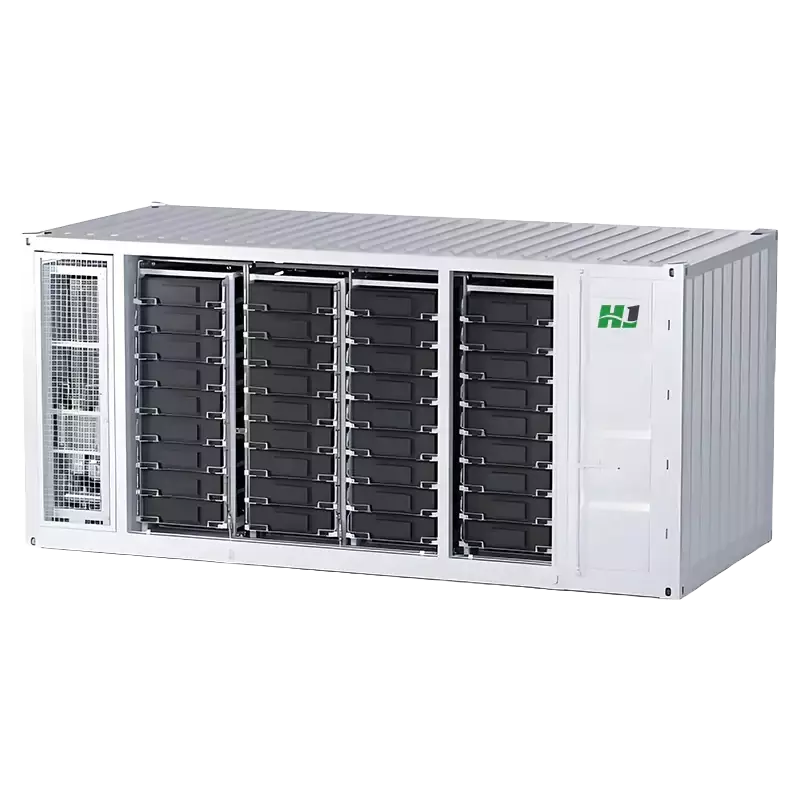
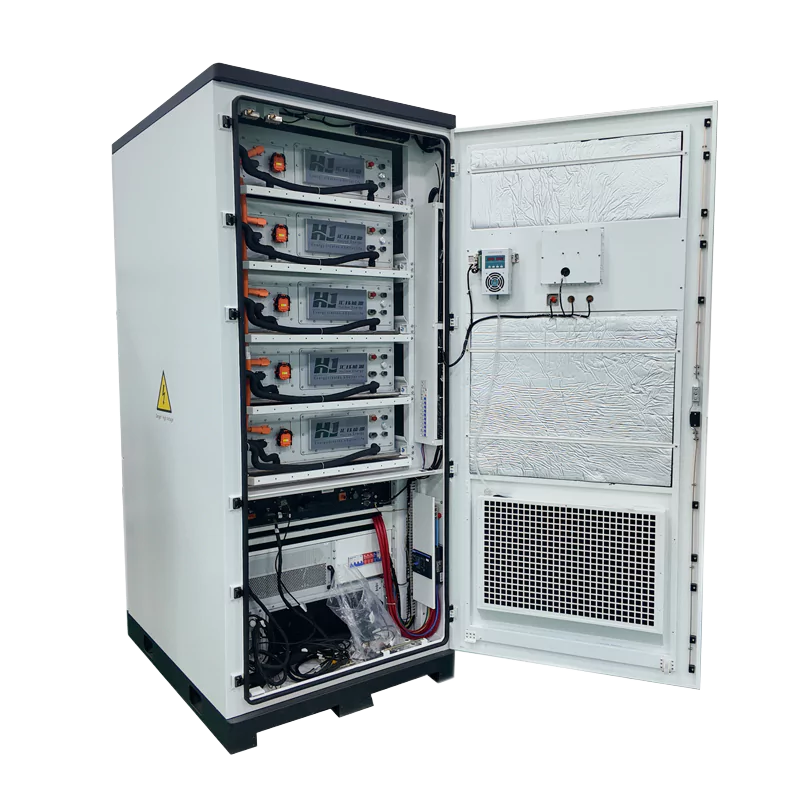
- Balance of Plant (BoP): Enclosures, HVAC/thermal management, fire suppression, cabling, and controls.
- Software & EMS: Controls for optimization, safety, predictive maintenance, and grid interaction.
- Installation & O&M: Civil works, commissioning, long-term maintenance, degradation management.
Understanding these components helps developers and investors evaluate Levelized Cost of Storage (LCOS) — the most accurate measure of the lifetime economics of energy storage.

2. The Past Decade (2016–2026): From Costly Pilots to Scalable Reality
In 2016, utility-scale BESS projects were limited and expensive. Total system-level costs typically ranged from **$700–900/kWh**, depending on chemistry and BoP requirements. By 2021, EV-driven supply chains and improved LFP chemistry pushed average system costs to approximately **$400–600/kWh**. By 2026, global BESS costs have converged toward **$200–350/kWh**, especially where LFP dominates and manufacturing is vertically integrated.
| Year | Estimated Average BESS Cost ($/kWh) | Key Drivers |
|---|---|---|
| 2016 | 700–900 | Early grid pilots, high pack costs, limited supply chain |
| 2021 | 400–600 | EV scale-up, shift toward LFP, optimized PCS/BoP |
| 2026 | 200–350 | Large-scale manufacturing, LFP dominance, localization |
From 2016 to 2026, four major forces reshaped the global storage industry:
- China’s industrial scale: Gigafactory expansion and LFP leadership reduced pack costs by over 40% from 2020–2025.
- Policy acceleration: Programs like the U.S. Inflation Reduction Act and EU Net Zero Industry Act created stable demand and local incentives.
- Technology learning curves: Improved cycle life, enhanced thermal design, and higher efficiencies reduced LCOS significantly.
- Digital optimization: AI-enabled monitoring and EMS reduced O&M costs by up to 20%.
According to IEA, annual BESS installations grew from under 1 GWh in 2016 to over 80 GWh by 2026 — a transformation unmatched in the energy sector.

3. Regional Cost Comparison in 2026
Global costs are converging, but regional differences remain due to labor, logistics, standards, and supply-chain depth.
| Region | Average 2026 Cost ($/kWh) | Remarks |
|---|---|---|
| United States | 260–350 | Higher construction & compliance costs; IRA tax credits reduce net CAPEX |
| China | 180–250 | Lowest global cost; fully integrated LFP and PCS supply chain |
| Europe | 300–400 | Growing localization; higher labor and regulatory compliance |
| Africa | 320–450 | Import-dependent but strong solar + storage growth |
| South Africa | 300–380 | Driven by tenders, mining electrification, microgrids |
Policies from the U.S. DOE and industrial strategies from China continue to shape regional competitiveness.

4. The Next Decade (2026–2036): Smarter, Cheaper, More Integrated
The coming decade will be defined not just by lower costs, but by deeper intelligence, new chemistries, and circular value chains.
- AI-Driven Operation: EMS platforms will improve dispatch accuracy, reduce degradation, and extend usable life.
- Second-Life Batteries: Repurposed EV packs will offer cost-effective storage for low-cycle applications.
- Sodium-Ion & Solid-State: Alternative chemistries will diversify markets and reduce lithium dependency.
- Hybrid Microgrids: Solar + wind + BESS will dominate rural electrification and remote industry operations.
Under favorable conditions (stable material prices, policy continuity, and strong manufacturing scale), global BESS costs could reach $150/kWh by 2036, with LCOS as low as $0.06/kWh in long-duration applications.
Uncertainty Factors (Important)
To ensure analytical transparency, long-term projections depend on:
- Raw material volatility (lithium, nickel, graphite)
- Policy continuity and trade dynamics
- Cycle-life and degradation improvements
- Manufacturing localization and logistics
5. LCOS: The Real Measure of Storage Competitiveness
While CAPEX is a key metric, the Levelized Cost of Storage (LCOS) provides a full-lifecycle view including degradation, efficiency, throughput, and long-term maintenance.
Typical LCOS values by 2026:
- Utility-scale lithium-ion BESS: $0.09–0.13/kWh
- Commercial/industrial BESS: $0.12–0.16/kWh
- Residential storage systems: $0.18–0.28/kWh
These ranges assume:
85–92% round-trip efficiency
10–15 year lifetime
3,000–6,000 cycles
1–2% annual O&M
Download Free BESS Cost & LCOS Calculator
Download the BESS Cost & LCOS Excel Template — complete with adjustable parameters for CAPEX, OPEX, efficiency, lifetime, and energy throughput.
6. Key Takeaways: 20 Years of Evolution in One View
- 2016: System costs of $700–900/kWh — early adoption.
- 2026: $200–350/kWh — global deployment and LFP scale.
- 2036: Toward $150/kWh — intelligent, circular, AI-optimized storage.
As the world moves toward high renewable penetration, energy storage becomes not just a supporting asset — but a central foundation of the global energy transition.
References
- International Energy Agency – Energy Storage Outlook
- BloombergNEF – Battery Price Survey
- U.S. Department of Energy
Find Your Solar + Battery Storage Specialist Now!
* Fill out this form and our experts will help you find the perfect solar storage solution for your home or business.